Is it enough to only recognize "100% cashmere" when buying wool sweaters, cashmere sweaters, and wool cardigans?
Is it enough to only recognize "100% cashmere" when buying wool sweaters, cashmere sweaters, and wool cardigans? What truly determines quality is actually these 5 details
Every autumn and winter, someone always asks the same question:
Why are all 100% cashmere sold for hundreds of yuan while others are sold for thousands of yuan
Woolen sweater manufacturer - I encounter this problem almost every year.
Many consumers' first reaction when purchasing cashmere sweaters is to open the tag and see if there are the words "100% cashmere".
Woolen sweater manufacturer - it seems that as long as it says 100% cashmere, this garment must have good quality.
But if you understand the cashmere industry, you will find a fact:
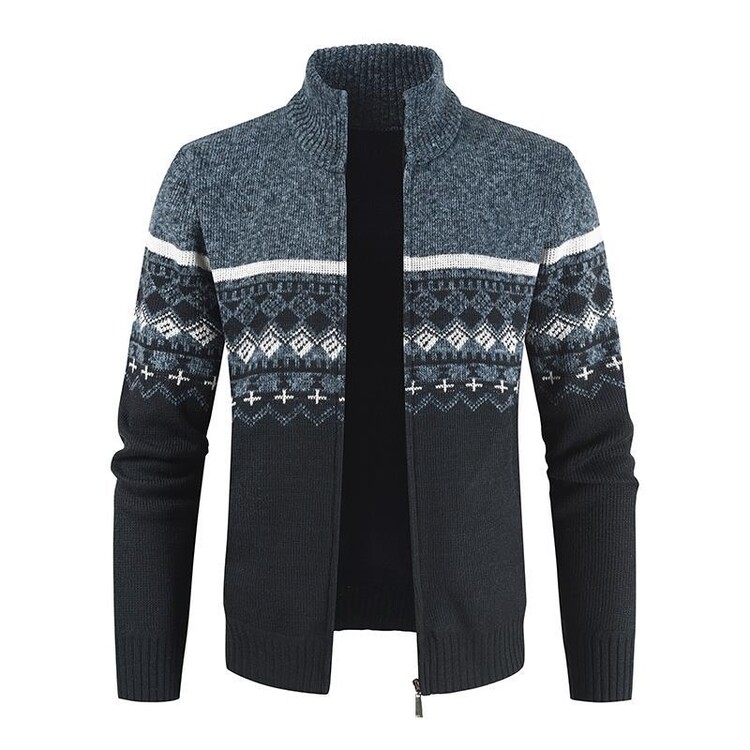
100% cashmere only tells you "what raw materials were used", but does not tell you "what grade of raw materials were used, what process was used, and how long it can last".
It's like two cups of coffee, one from premium coffee beans and one from regular instant, with the same ingredient category but completely different quality and experience.
The same goes for cashmere.
Woolen sweater manufacturers - what truly determines the quality of a cashmere sweater is not the four words on the label, but the details that many consumers may not notice in their daily lives.
Today, let's talk from a professional perspective about what should be paid attention to when buying cashmere sweaters.
1、 Implementing standards is the first step in understanding a product
Many people have the habit of first touching the fabric, checking the color, and trying out the pattern when buying clothes.
Actually, there is another detail worth taking a look at first - the product label.
Legitimate cashmere sweaters are usually fully labeled with:
Product Name
Cashmere content
Execution Standard
safety category
Care Instructions
Production enterprise information
These contents may seem insignificant, but they are important foundations for judging whether a product is standardized.
Woolen sweaters, cashmere sweaters, wool cardigans, for ordinary consumers, they may not need to remember every standard number, but at least they can develop the habit of checking whether the product information is complete.
2、 Both are cashmere, and there are differences in the quality of the raw materials
Many people know that wool and cashmere are different, but they don't know:
Cashmere itself also has grade differences.
When evaluating the quality of cashmere in the industry, multiple indicators are considered comprehensively, among which the most important is fiber fineness.
Generally speaking, the finer the fiber, the softer the hand feel, and the more comfortable it is to wear close to the body.
Woolen sweater manufacturers - but there is another easily overlooked issue here.
Fine doesn't necessarily mean better.
If the fibers are thin but relatively short, fiber migration, also known as pilling, is more likely to occur during wearing.
Woolen sweaters, cashmere sweaters, wool cardigans, and truly high-quality cashmere usually achieve a balance between fineness, length, and uniformity.
So, when evaluating a cashmere sweater, it's not just about whether it's 100% cashmere, but also about the quality of the cashmere itself.
3、 Weight determines the wearing experience, not just the ability to keep warm
Many consumers have a habit when choosing cashmere sweaters.
Weigh it in your hand.
I always feel that the heavier, the warmer.
Actually, this is a common misconception.
Weight reflects the approximate weight of the raw materials used in clothing, and the insulation performance is also affected by various factors such as the fluffiness of cashmere fibers, fabric density, and weaving techniques.
Generally speaking:
About 120 grams, more suitable for spring and autumn;
About 160 grams, suitable for most regions to wear in autumn and winter;
More than 180 grams, more suitable for environments with lower temperatures.
When choosing weight, it is more important to combine it with one's own wearing needs, rather than blindly pursuing heaviness.
4、 The higher the number of stitches, the finer the fabric is usually
If you carefully read the introduction of some high-quality cashmere sweaters, you often see descriptions such as "12 stitches", "14 stitches", "16 stitches", etc.
Woolen sweater manufacturers - needle count, can be understood as a reflection of the level of weaving precision.
Generally speaking, the higher the number of stitches, the smoother the surface of the fabric and the more delicate the overall texture.
However, this does not mean that the higher the needle count, the more advanced it is.
If the quality of the raw materials is average, even with higher needle counts, it cannot truly improve the overall quality.
A good cashmere sweater is never determined by a single indicator, but by the combined effects of raw materials, spinning, weaving, and finishing.
5、 Fabric density determines how long a cashmere sweater can be worn
Finally, and most easily overlooked, is the fabric density.
Many people like to feel the texture when buying clothes.
However, in reality, the soft feel can be improved through post-processing techniques, while fabric density can have a greater impact on long-term wearing performance.
Weaving high-density cashmere sweaters, usually:
Less prone to deformation;
Better resilience;
More stable insulation performance;
After wearing for a long time, it is easier to maintain the shape.
When purchasing woolen sweaters, cashmere sweaters, and wool cardigans, you can gently open the fabric to observe the needle path.
If the needle holes are arranged evenly and the organization is tight, it indicates that the weaving is more delicate; If there is a noticeable gap when gently pulled, it is more likely to become loose and deformed after long-term wearing.
Of course, this is just a simple reference method and requires a comprehensive judgment based on the overall workmanship.
Why is there such a big price difference?
Woolen sweater manufacturers - Many consumers believe that the price of a cashmere sweater is mainly due to the expensive brand.
In fact, brand is only a part of the price.
Woolen sweaters, cashmere sweaters, wool cardigans, and the ones that truly determine costs are:
Raw material grade;
Fineness and length of cashmere fiber;
Heavy weight configuration;
Weaving specifications;
Fabric density;
Dyeing and finishing process;
Ready to wear production;
Quality inspection.
Each step of these processes will affect the final wearing experience and service life.
Woolen sweaters, cashmere sweaters, and wool cardigans are all made of 100% cashmere, so it is not surprising that there are significant price differences between different products.
In conclusion
Nowadays, more and more consumers are paying attention to the fabrics and craftsmanship behind clothing, not just the brand and price.
This is actually a good thing.
Because a cashmere sweater that is truly worth wearing for a long time is not just about the label stating "100% cashmere", but more importantly, achieving a reasonable balance between raw materials, craftsmanship, pattern, and quality.
Next time you purchase a cashmere sweater, remember these 5 keywords:
Woolen sweater, cashmere sweater, wool cardigan, execution standard, fiber fineness, weight, number of stitches, fabric density.
Woolen sweater manufacturers - they may not necessarily help you buy the most expensive cashmere sweater, but they can help you more rationally judge whether a cashmere sweater is truly worth buying.
Woolen sweaters, cashmere sweaters, wool cardigans, after all, the truly valuable consumption is not spending more money, but using the same money to buy products that are more suitable for oneself.